Food Waste Collection & Recycling Services for Businesses in Singapore
NEA General Waste Collector — Class A & B · Since 1992
Gee Hoe Seng provides NEA-licensed food waste collection, disposal, and recycling services for F&B operators, hawker centres, hotels, food manufacturers, hospitals, and schools across Singapore. We hold a General Waste Collector licence (Class A and Class B) issued by the National Environment Agency. We have operated in Singapore since 1992.
Both ad-hoc and scheduled food waste collection contracts are available. We provide compliance documentation with every collection to support your NEA reporting obligations.
Singapore Food Waste Statistics
In 2025, Singapore generated 790,000 tonnes of food waste. Only 18% — 140,000 tonnes — was recycled. By improving food waste recycling through composting, anaerobic digestion, and black soldier fly treatment, Singapore can recover valuable nutrients and energy in support of a circular economy.
What is Food Waste Collection and Recycling?
Food waste collection is the recovery and transport of discarded food from commercial and industrial premises to downstream treatment facilities. Collected food waste is then processed through composting, anaerobic digestion, or black soldier fly cultivation, converting waste into compost, biogas, or agricultural feed inputs rather than sending it for incineration.
At Gee Hoe Seng, we manage the first two stages of this process: collection and sorting. Downstream treatment is carried out by our licensed recycling partners. We ensure food waste is collected compliantly, transported safely, and delivered to the appropriate facility for treatment.
What Food Waste Do We Collect from Singapore Businesses?
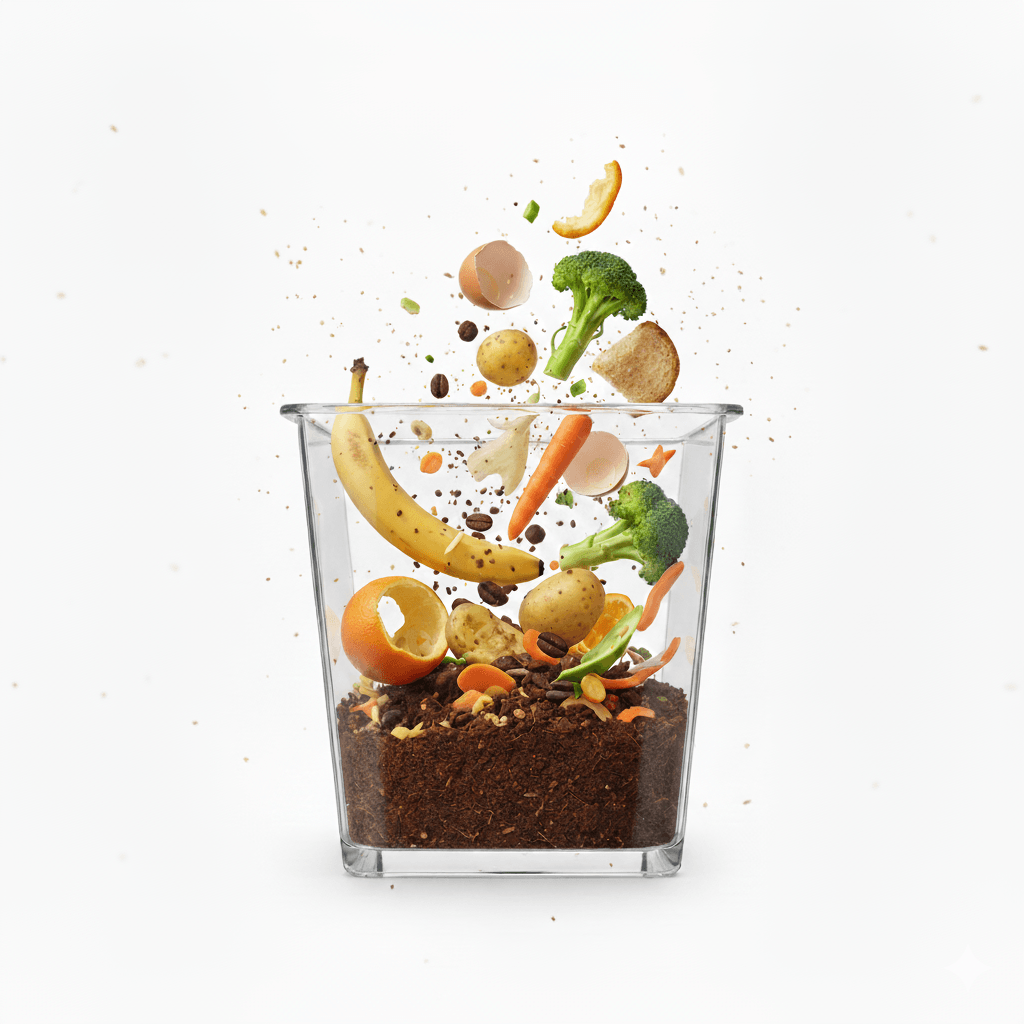
We accept a wide range of food waste from commercial and industrial sources. All materials must be free from non-organic contaminants such as plastics, packaging, and liquids where possible. Contaminated or mixed loads are charged at higher disposal rates.
If you are unsure whether your food waste type is accepted, contact us before scheduling a collection. We will advise on handling requirements and whether any pre-treatment is needed.
If you are unsure whether your food waste type is accepted, contact us before scheduling a collection. We will advise on handling requirements and whether any pre-treatment is needed.
Food Waste Recycling Services in Singapore
Circular Solutions for Food Waste in Singapore
Food waste recycling converts organic waste into useful outputs rather than sending it for incineration. At Gee Hoe Seng, we work with licensed downstream partners to direct collected food waste toward the most appropriate treatment method based on waste type and volume.
Composting
Fruit, vegetable, and organic waste decomposed into nutrient-rich compost for landscaping and farming
Anaerobic Digestion
High-moisture food waste processed in oxygen-free tanks, producing biogas for energy recovery
Black Soldier Fly Treatment
Grains and plant residues converted into agricultural feed inputs using black soldier fly larvae
Food Waste Collection and Disposal
Pricing in Singapore
Our pricing depends on waste volume, collection method, frequency, and site access. The options below provide a general guide.
For general waste or bulky waste disposal, please refer to our Waste Collection & Disposal services for commercial and industrial clients.
Ad-Hoc Collection
Regular Collection
Both options include: no minimum weight, pickup from your location, and disposal charges applied in addition to collection/transport fees.*
- All food waste is chargeable. Cash rebates do not apply to food waste.
- Food waste must be free from packaging and non-organic materials. Frozen waste requires thawing, and liquid waste (including beverages) requires separate handling — both may incur additional charges. Contaminated or mixed loads will be charged at higher disposal rates.
Additional Notes
- Ad-hoc collections in restricted or remote areas (e.g. Town, CBD, Sentosa, Jurong Island, Changi Air Freight Centre, Shipyards) — from $180/trip
- Additional collection charges apply for loads exceeding 4 pallets of food waste.
How Food Waste Collection Works
At Gee Hoe Seng, we manage the first and most essential stages of Singapore’s food waste recycling chain — collection and sorting. We ensure food waste is safely recovered, separated, and prepared for downstream partners who process it through composting, anaerobic digestion, or black soldier fly (BSF) treatment.
Together, this five-step process converts discarded food waste into valuable resources that support circular economy goals.
1. Food Waste Collection
Food waste is collected from commercial and industrial premises using our own fleet of vehicles. Our in-house team ensures timely and compliant collection for all clients.
2. Sorting & Pre-Treatment
Collected waste is sorted to remove contaminants such as packaging, plastics, or non-organic items. Clean organic waste is separated for downstream recycling, ensuring the highest recovery.
3. Composting Process
Organic materials like fruit and vegetable waste are biologically decomposed into nutrient-rich compost, ideal for landscaping, farming, and soil restoration.
4. Anaerobic Digestion
Food waste with high moisture or energy content undergoes anaerobic digestion, where microorganisms break it down in oxygen-free tanks. This process produces biogas and digestate.
5. Black Soldier Fly (BSF) Treatment
Certain food waste streams, such as grains and plant residues, are used to cultivate black soldier fly larvae, closing the loop in sustainable waste management.
NEA Compliance and Documentation
Under the Resource Sustainability Act (RSA), owners and operators of prescribed large commercial and industrial buildings are required to segregate food waste for treatment and submit annual waste data reports to NEA.
For new buildings granted planning permission on or after 1 January 2021, this requirement has been in effect since 8 March 2024. Prescribed buildings include:
- Shopping malls containing food establishments collectively exceeding 3,000 sqm gross floor area
- Hotels containing food establishments or function areas collectively exceeding 3,000 sqm gross floor area
- Food processing or catering premises where the operational space exceeds 750 sqm gross floor area
- Large mixed-use industrial buildings exceeding 20,000 sqm GFA with more than 20 food-related occupiers
For existing buildings, NEA will progressively extend these requirements from 2027 onwards, in line with the completion of the Food Waste Treatment Facility at Tuas Nexus as part of the Integrated Waste Management Facility. We provide collection records and compliance documentation to support your NEA reporting obligations.
Frequently Asked Questions
Explore our FAQs below to better understand how Gee Hoe Seng’s food waste collection works.
Under Singapore’s Resource Sustainability Act 2024 Regulations, prescribed large commercial and industrial buildings must segregate food waste for treatment and submit annual waste reports to NEA. Prescribed buildings include shopping malls containing food establishments collectively exceeding 3,000 sqm gross floor area, hotels containing food establishments or function areas collectively exceeding 3,000 sqm gross floor area, and food processing or catering premises where the operational space exceeds 750 sqm gross floor area. For new buildings granted planning permission on or after 1 January 2021, this requirement applies from 8 March 2024. For existing buildings, NEA will progressively extend the requirement from 2027. Gee Hoe Seng provides compliant food waste collection and documentation to support your annual NEA reporting obligations. Contact us to discuss your requirements.
Collected food waste is directed to licensed downstream treatment partners for processing. NEA recognises seven prescribed food waste treatment methods under the 2024 Regulations: aerobic digestion, anaerobic digestion, composting, processing into animal feed or fodder, processing into food ingredients, processing into non-food materials, and any other process producing a usable end product. At Gee Hoe Seng, the primary downstream treatment methods used by our partners are composting, anaerobic digestion, and black soldier fly cultivation for conversion into animal feed inputs.
Gee Hoe Seng accepts food waste from commercial and industrial premises across two categories. Pre-consumed surplus food includes expired or off-spec frozen food, surplus canned goods, bulk grains and nuts, palm kernel shells, and coconut husks. Post-consumed kitchen and preparation waste includes cooked food leftovers, meat and seafood waste, fruit and vegetable scraps, bakery and dairy products, hawker centre food waste, and food manufacturer process residues. All materials should be free from non-organic contaminants such as plastics and packaging where possible to maximise recycling recovery rates. Contact us if you are unsure whether your waste type is accepted.
Ad-hoc collection is an on-demand service from $120 per trip, suited for businesses with occasional or irregular food waste volumes. For premises in restricted or remote areas — including CBD, Sentosa, Jurong Island, Changi Air Freight Centre, and shipyards — ad-hoc collection starts from $180 per trip. Scheduled collection is a regular contract arrangement — daily, weekly, or fortnightly — designed for F&B operators, hotels, food manufacturers, and hawker centres with consistent food waste output. Scheduled contracts are typically more cost-efficient and provide documentation continuity for NEA compliance reporting. Contact Gee Hoe Seng to discuss which option suits your operation.
Yes. Under Singapore’s Environmental Public Health Act, all commercial businesses must engage a licensed general waste collector for waste disposal, including food waste. Additionally, under the Resource Sustainability Act, owners and operators of prescribed large commercial and industrial buildings must segregate food waste for treatment and report waste data annually to NEA. For new buildings granted planning permission on or after 1 January 2021, this requirement has been in force since 8 March 2024. For existing buildings, NEA will progressively extend the requirement from 2027 when the Food Waste Treatment Facility at Tuas Nexus becomes operational. Gee Hoe Seng is NEA-licensed (Class A and Class B) and provides compliant collection with documentation for regulatory reporting.
Gee Hoe Seng collects food waste from a wide range of commercial and industrial businesses across Singapore, including F&B outlets, restaurants, hotels, hawker centres, supermarkets, food manufacturers, food caterers, hospitals, and schools. We are NEA-licensed (Class A & B) to collect both pre-consumed and post-consumed food waste. Both scheduled and ad-hoc collection services are available, tailored to your waste volume and operational requirements.
Yes. Gee Hoe Seng holds an NEA General Waste Collector licence (Class A & B), authorising us to collect and transport food waste from commercial and industrial premises across Singapore. We have been NEA-licensed and operating in Singapore since 1992. Compliance documentation and collection records are available on request for audit and regulatory reporting purposes.
Ad-hoc food waste collection starts from $120 per trip. For premises in restricted or remote areas — including CBD, Sentosa, Jurong Island, Changi Air Freight Centre, and shipyards — the rate starts from $180 per trip. Disposal charges apply in addition to collection and transport fees. Scheduled collection pricing depends on waste volume, collection frequency, and site access requirements — regular contracts are typically more cost-efficient for businesses with consistent food waste output. Contact Gee Hoe Seng at +65 6844 1323 or email [email protected] for a quote tailored to your operation.