Paper & Cardboard Recycling for Businesses in Singapore
NEA General Waste Collector — Class A & B · Since 1992
Gee Hoe Seng provides NEA-licensed paper and cardboard recycling for businesses across Singapore. We collect office paper, cardboard boxes, magazines, newspapers, and shredded paper from offices, warehouses, factories, and commercial buildings. Self drop-off at our Ubi facility is free with cash rebates paid on the spot. Ad-hoc collection starts from $120 per trip. Regular scheduled collection is free for qualifying volumes of 500kg or more per material type, with cash rebates based on prevailing market rates and paper grade.
We hold a General Waste Collector licence (Class A and Class B) issued by the National Environment Agency, are ISO 9001 and ISO 14001 certified, and have operated in Singapore since 1992.
Singapore’s Paper Recycling Trends
According to the National Environment Agency (NEA), paper recycling rates in Singapore have been falling.
What is Paper Recycling?
Paper recycling is the process of collecting, sorting, and reprocessing used paper into new pulp for manufacturing. Recycled fibres reduce demand for virgin pulp, conserve natural resources, and divert paper from incineration.
Each time paper is recycled, fibres shorten — so virgin fibres must be reintroduced into the system to maintain quality. This means today’s office paper becomes tomorrow’s carton, and yesterday’s carton becomes today’s tissue.
For commercial waste generators, proper segregation at source directly determines whether paper qualifies for rebates or is charged as waste disposal. Higher-grade papers like BW (white office paper with black printing) carry the highest rebate value; mixed, contaminated, or coated paper attracts sorting charges or disposal rates.
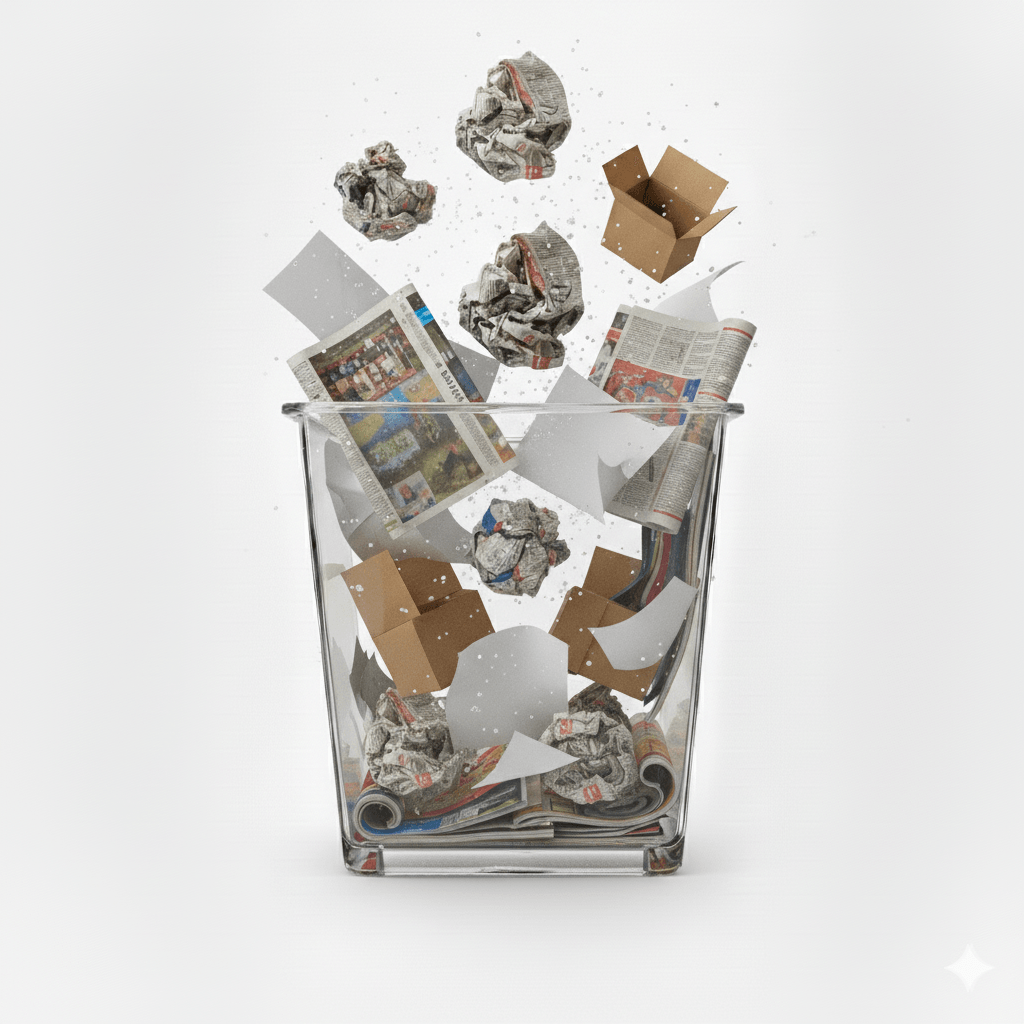
Types of Papers We Recycle from Singapore Businesses
Higher-grade papers, such as BW (white papers with black printing), retain better recycling value and qualify for rebates, while lower-grade or contaminated paper may incur sorting or disposal charges.
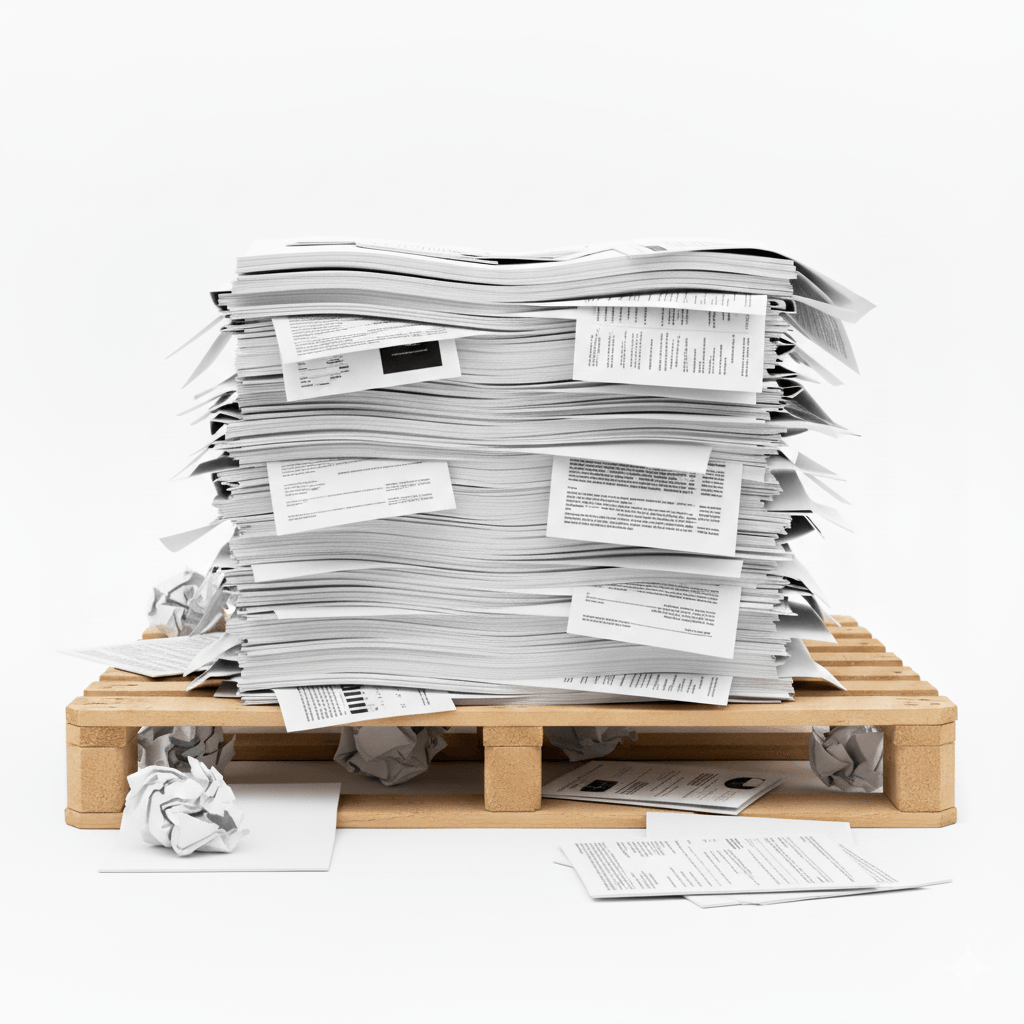
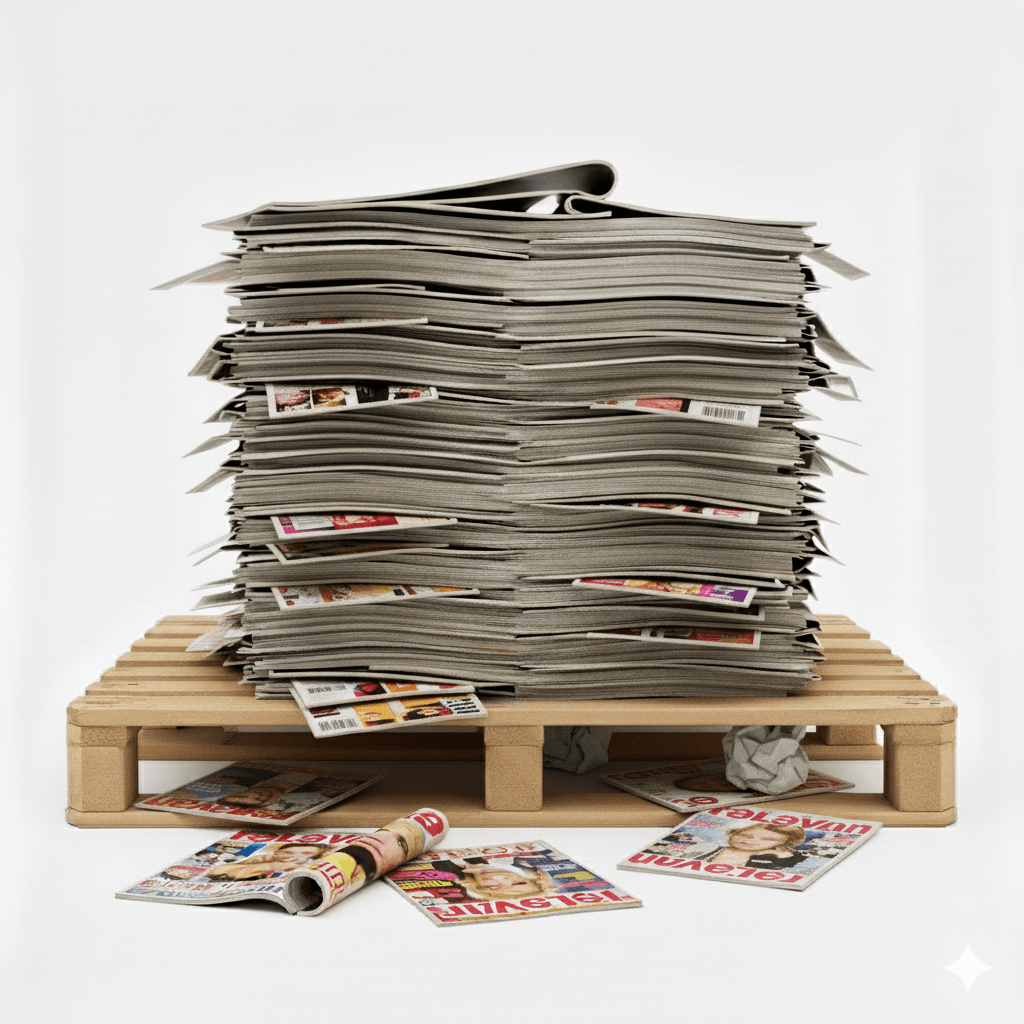
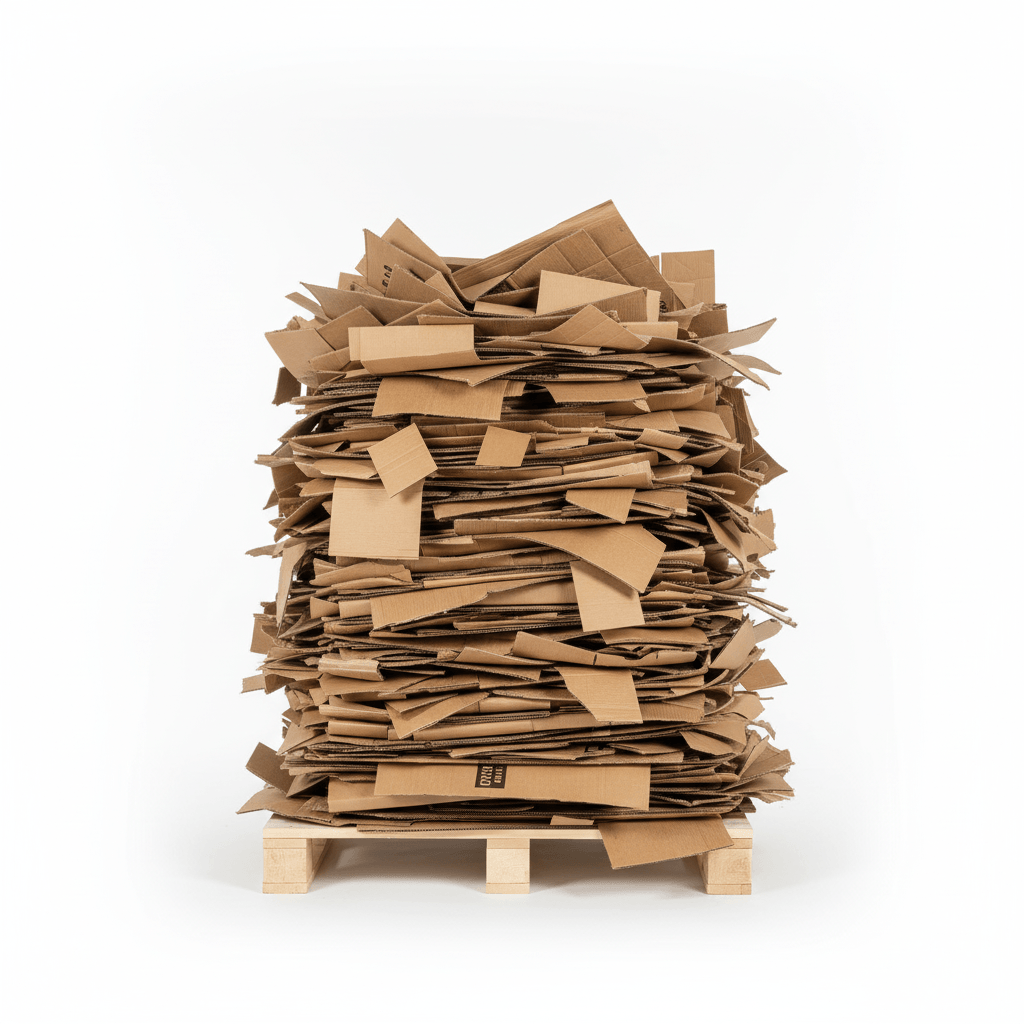
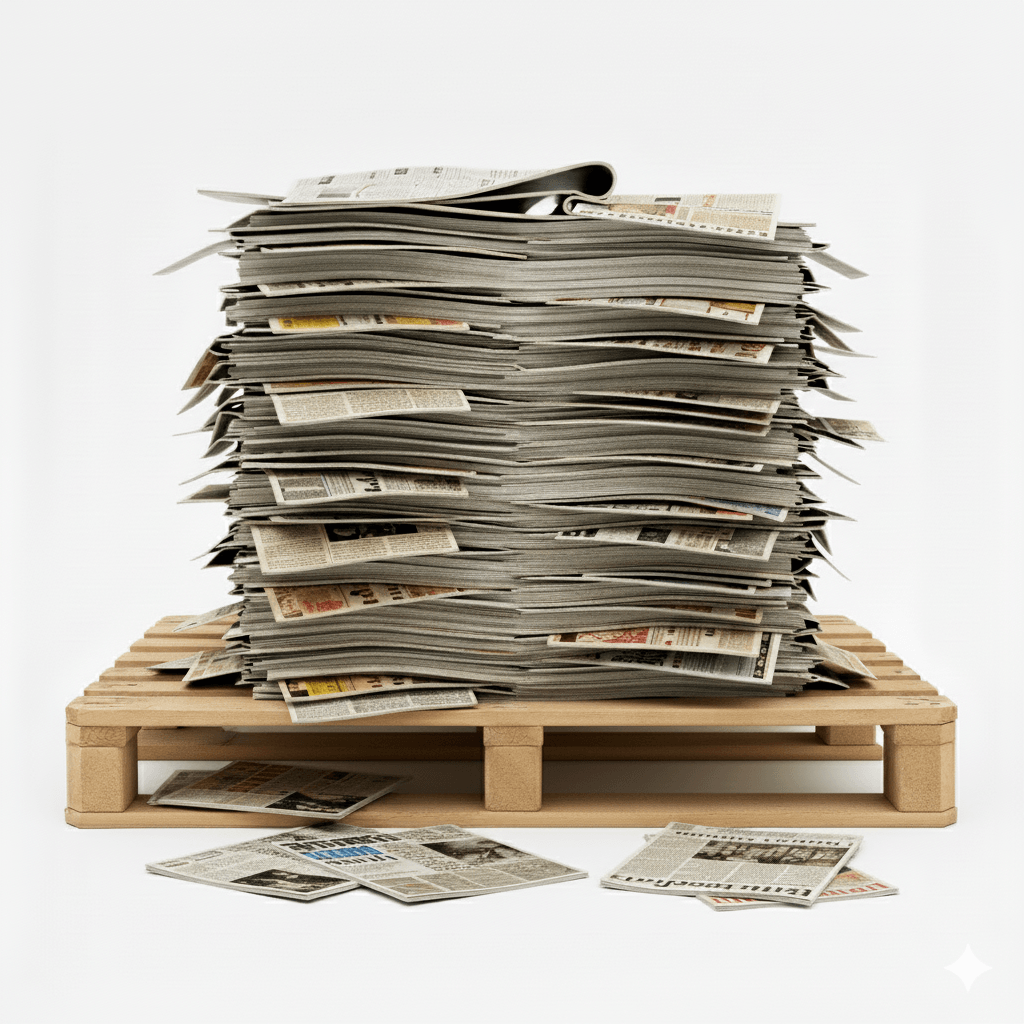
Note: Always remove attachments and contaminants from the recyclables, as these lower the value of recyclables.
Learn more about accepted materials and handling requirements in our Recycling & Waste Guides.
Paper Recycling Collection Options and Pricing
This pricing table applies only to recyclable materials such as paper, industrial plastics and metal.
Different recyclable materials may be combined, provided they are properly sorted and separated. The options below provide a general pricing guide.
For general waste or bulky waste disposal, please refer to our Waste Collection & Disposal Services for commercial and industrial clients.
Self Drop-Off
- No minimum weight required
- Self drop-off at our warehouse
- Receive cash rebates
Ad-Hoc Collection
- No minimum weight required
- Pickup from your location
- No cash rebates
Regular Collection
- Minimum 500kg per material type
- Pickup from your location
- Receive cash rebates
1) Recyclable Materials (May incur sorting charges)
– Mixed or unsorted papers
Sorting charges may apply due to additional manual handling and contamination risks.
2) Non-Recyclable Materials (May incur disposal charges)
– Carbon paper, coated paper, tissue paper or waxed materials
– Contaminated or food-stained paper
– Archfiles, plastic folders, binders
These items are either non-recyclable and will therefore incur additional charges.
Additional Notes
– Ad-hoc collections in restricted or remote areas (e.g. Town, CBD, Sentosa, Jurong Island, Changi Air Freight Centre, Shipyards) — from $180/trip
– Shredding services are available upon request and quoted separately.
How Our Paper Recycling Process Works
At Gee Hoe Seng Pte Ltd, we manage the first and most important stages of Singapore’s paper recycling chain — collection and sorting. We ensure recyclable materials are properly recovered and prepared for downstream recycling partners, who handle baling, export, and pulping.
Together, this five-step process transforms recyclable paper into new, useful materials. The process of paper recycling often involves the following steps:
1. Paper Collection
Paper waste is collected from offices, factories, warehouses, and commercial buildings using our own fleet of vehicles. Our in-house team ensures timely and compliant collection for all clients.
2. Paper Sorting
Collected materials are sorted into categories such as office paper, cartons, newspapers, and magazines. Proper sorting ensures maximum fiber recovery and material quality for recycling.
3. Paper Baling
After sorting, recyclable paper is compacted and baled by licensed recycling partners. This process reduces volume and prepares the materials for export.
4. Export Processing
As there are no large-scale paper pulping facilities locally, these baled papers are exported overseas for further processing. The paper is pulped and de-inked to recover usable fibers.
5. Product Renewal
The recovered pulp is pressed and rolled into new paper materials such as cartons, packaging, and tissue paper — closing the loop and giving new life to recycled fibers.
Frequently Asked Questions
Have questions about what you can recycle, how rebates work, or whether your items qualify?
Explore our FAQs below to better understand how Gee Hoe Seng helps you recycle right.
Paper grades determine recycling value and rebate rates. BW (Black and White) is high-grade office paper printed in black ink only — the highest-value recyclable due to long fibres and minimal bleaching. OCC (Old Corrugated Cartons) is brown cardboard boxes — recycled at high volume into paper bags, egg trays, and new cartons. ONP (Old Newspapers) is newsprint — lower-grade due to short fibres and ink content, recycled into new newsprint or packaging. MA (Magazines) includes coated paper and catalogues — recyclable through modern de-inking processes that remove the clay coating. Pre-sorting papers by grade attracts the best rebate rates.
Keep paper and cardboard dry and free of food contamination. Remove non-paper items such as plastic folders, metal fasteners, and binder rings where possible. Flatten cardboard boxes to reduce volume. Place shredded paper in bags or boxes to prevent dispersal. Mixed or unsorted paper is accepted but pre-sorted materials attract better cash rebate rates and avoid sorting surcharges. Gee Hoe Seng collects from your premises — no need to transport materials yourself.
Yes. Gee Hoe Seng provides recycling weight reports and collection documentation on request. These records include collection date, material type, and weight collected — suitable for corporate sustainability reports, ISO 9001 and ISO 14001 audits, NEA mandatory waste reporting, and ESG disclosures. Request documentation when scheduling your collection, or contact our team to arrange structured regular reporting for ongoing compliance needs.
There is no strict minimum quantity for ad-hoc paper recycling collections. Cash rebates apply for bulk collections of 500kg and above. For smaller volumes, self drop-off at our facility is available at no charge. For regular scheduled collections, we assess your typical monthly output and recommend a collection frequency that is cost-efficient for your operation. Contact Gee Hoe Seng at +65 6844 1323 to discuss the best option for your volume.
Yes. Gee Hoe Seng holds an NEA General Waste Collector licence (Class A & B), authorising us to collect and transport recyclable materials including paper and cardboard from commercial and industrial premises across Singapore. We are also ISO 9001 (Quality Management) and ISO 14001 (Environmental Management) certified. We have been operating as a licensed recycler since 1992.
Self drop-off at Gee Hoe Seng’s facility is free, with cash rebates paid for qualifying volumes. Ad-hoc collection starts from $120 per trip for standard locations. Restricted or remote areas — including the CBD, Sentosa, Jurong Island, and Changi Air Freight Centre — incur a surcharge from $180 per trip. Regular scheduled collection pricing depends on volume and frequency. Contact Gee Hoe Seng at +65 6844 1323 or email [email protected] for a customised quote.
Yes. Gee Hoe Seng offers cash rebates for bulk paper and cardboard recycling. Cash rebates are available for collections of 500kg and above, paid based on current market rates and material quality at the time of collection. For self drop-off at our facility, payment is made on the spot after weighing. For scheduled collection, rebates are processed after collection. Contact us at +65 6844 1323 for current rates.
Gee Hoe Seng recycles a wide range of paper and cardboard materials from commercial and industrial premises, including office paper, newspaper, cardboard boxes, carton boxes, magazines, books, arch files (contents only), and shredded paper. Mixed or unsorted papers are accepted but may incur sorting charges. Non-recyclable materials — including carbon paper, waxed paper, tissue paper, and food-contaminated paper — cannot be accepted for recycling.
Need a compliant and efficient paper recycling solution?
Our team will review your paper types, volumes, and segregation practices to recommend a rebate-eligible, compliant, and cost-effective paper recycling programme for your business.
NEA-licensed paper and cardboard recycling services with transparent weighing and reporting for businesses in Singapore.